Bruno Munari (Graphic Design Around the World 17)
Bruno Munari (Graphic Design Around the World 17)
Couldn't load pickup availability
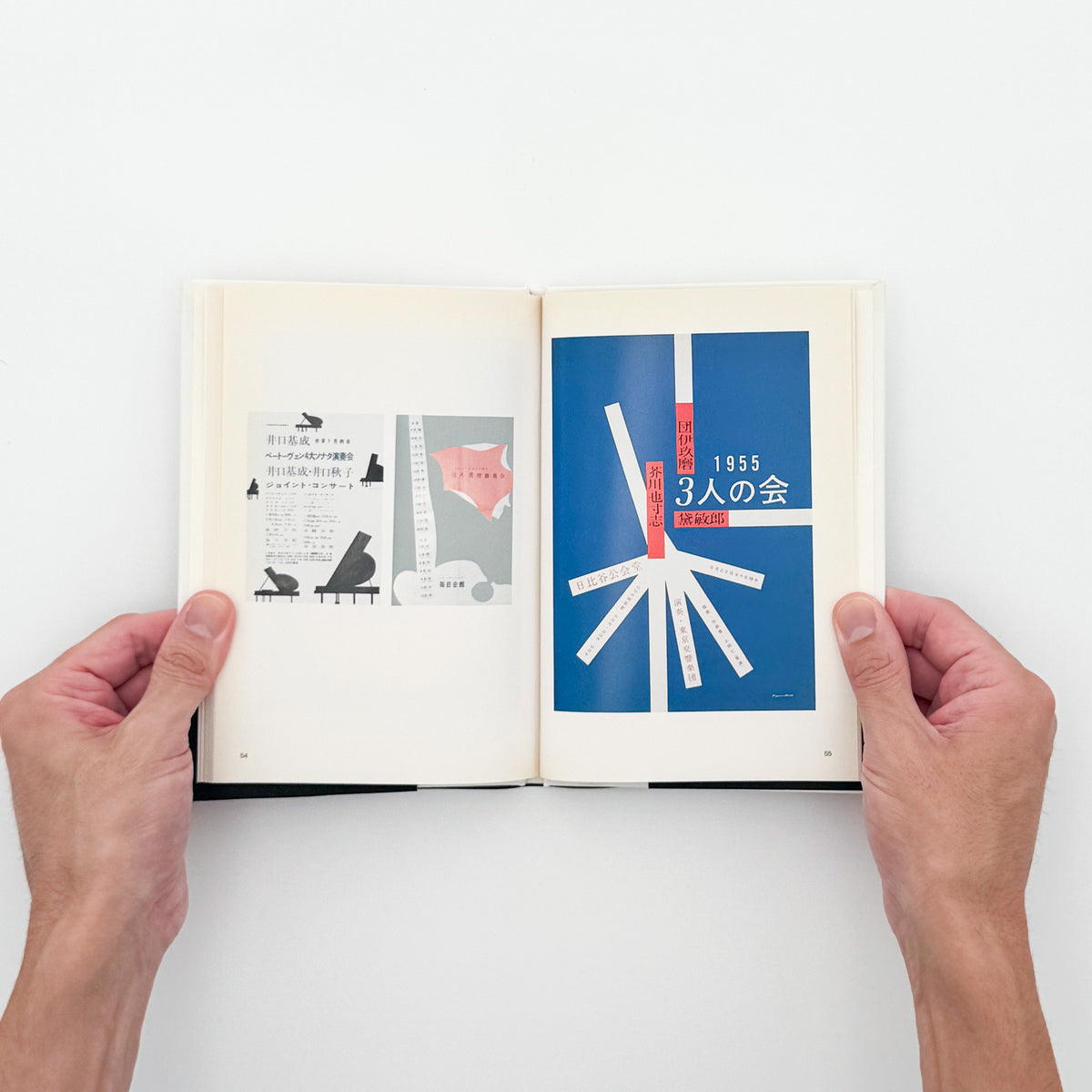
“World Graphic Design 17” introduces the work of Italian artist and designer Bruno Munari (1907–1998). Published in 1995 as the 17th volume in Ginza Graphic Gallery’s “ggg Books” series, it was supervised by Ikko Tanaka.
Beginning with his involvement in Futurism, Munari continued to work across a wide range of fields, including graphic design, children’s books, three-dimensional works, product design, and education. This book introduces works that explore the relationship between form and language, as well as expressions that draw on a spirit of play and experimentation.
In Munari’s own essay “Tree,” he focuses on the forms and meanings of kanji characters and considers the possibilities of creating new images through the texture and expression of letters. The opening section includes an essay by art critic Marco Meneguzzo, which discusses the flexible thinking that underlies Munari’s work and its relationship to modern design.
A compact volume that traces Munari’s work freely spanning letters, imagery, form, and education.
[Publisher] Ginza Graphic Gallery
[Publication Date] January 12, 1995
[Number of Pages] 63 pages
[Size] Approx. 136 × 189 × 10 mm / 230 g
[Format] Hardcover
[Language] Japanese and English
[Title Reading] Bruno Munari (World Graphic Design 17)
[Author/Editor/etc.] Bruno Munari/Works, text, design; Ikko Tanaka/Supervisor; Toshihiro Miki/Design; Marco Meneguzzo/Text; Chihiro Fujiwara/Cooperation
[Printing/Binding] Dai Nippon Printing Co., Ltd./Printing and binding; Masaharu Tajima/Printing direction
[ISBN] 4924956171
[Condition] Used [5] Fair (Slight rubbing, light tanning on the edges)
[Accessories] Obi strip
[Featured in] -
[Related Exhibitions] -
Bruno Munari 1907–1998
Born in Milan, Italy. He participated in Futurist activities from the 1920s and created “useless machines” in the 1930s. Working across fields such as painting, sculpture, graphic design, product design, and children’s books, he consistently pursued experimental forms and a spirit of play. He also engaged in workshops and educational activities to foster children’s creativity, and from the 1950s onward, he held exhibitions in Japan. His works have been translated into multiple languages and have had a wide-ranging influence on design and art education.
< Related Figures >
Bruno Munari
Ikko Tanaka
Marco Meneguzzo
Danesi
Maurizio Coraini