Complete oil paintings by Van Gogh
Complete oil paintings by Van Gogh
Couldn't load pickup availability
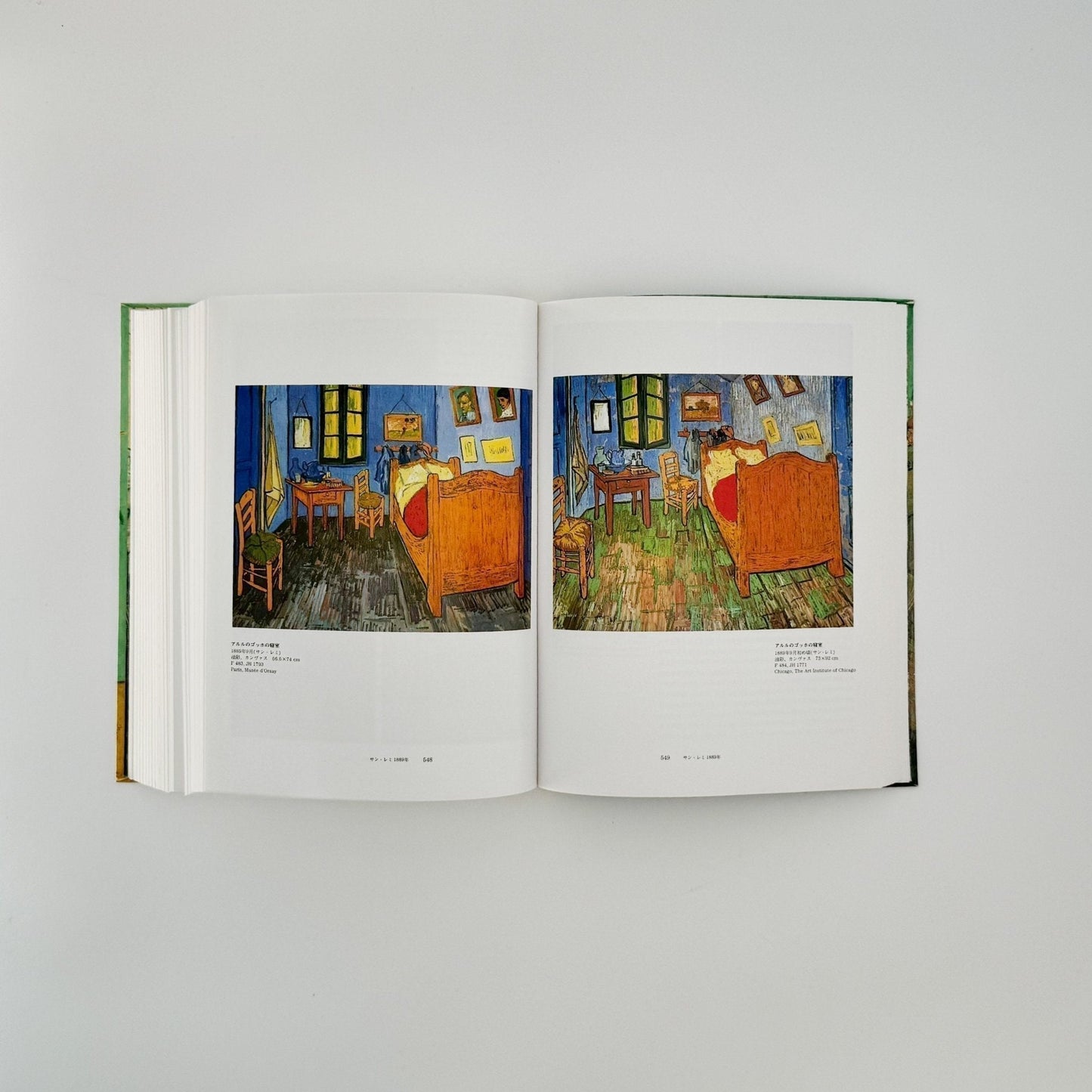
This comprehensive collection of oil paintings by Dutch painter Vincent van Gogh systematically traces his surviving oil paintings, from his early peasant portraits in dark tones, to the vivid colors of his Arles period, to the intense brushstrokes of his later years in Auvers.
The plates, arranged in chronological order, are accompanied by information on the works and their collections, clearly illustrating the transitions in Van Gogh's style and themes over his short life. A wide range of motifs, including portraits, still lifes, landscapes, and self-portraits, are reproduced in high resolution, allowing visitors to see the thick textures and layering of colors in great detail.
The book is published by TASCHEN, known for its art books. " This book is a combined edition of "Van Gogh's Complete Oil Paintings, Volumes 1 and 2," providing a comprehensive overview of Van Gogh's art.
[Title] Complete Oil Paintings of Van Gogh
[Publisher] TASCHEN
[Date of publication] 2002
[Number of pages] 740 pages
[Size] Approx. 200*262*41mm, 2227g
[Format] Softcover
[Language] Japanese
[Title reading] Gohhozenyusaiga
[Authors/Editors] Ingo F. Walter/Editor, Rainer Metzger/Editor
[Print] -
[ISBN] 4887831080
[Condition] Used [4] Average to below average (spine discoloration, slight stains on top, slight wear on edges, slight creases on back cover)
[Accessories] None
[Featured book] -
[Related Exhibitions]
Vincent van Gogh (March 30, 1853 – July 29, 1890)
Born in Zundert, the Netherlands, he worked as an art dealer, a teacher, and a missionary before deciding to become a painter at around the age of 27. In his early years, he painted powerful figures in dark tones, often depicting peasants and workers. In 1886, he moved to Paris, where he interacted with Impressionist and Neo-Impressionist painters. His colors gradually became brighter, and his brushstrokes became bolder.
In 1888, he moved to Arles in the south of France, where he created his masterpieces, such as Sunflowers and Cafe Terrace at Night, under the intense sunlight. His life with Paul Gauguin fell apart, and he cut off his own ear. He continued to create works while recuperating, and painted works such as Starry Night while at the Saint-Rémy sanatorium.
In his later years, he lived in Auvers-sur-Oise, and in just ten years of artistic career he produced around 850 oil paintings and numerous drawings. He died in 1890 at the age of 37. While he received little recognition during his lifetime, his innovative use of color and brushwork was highly praised after his death, and he had a decisive influence on 20th-century art.
< Related Figures >